


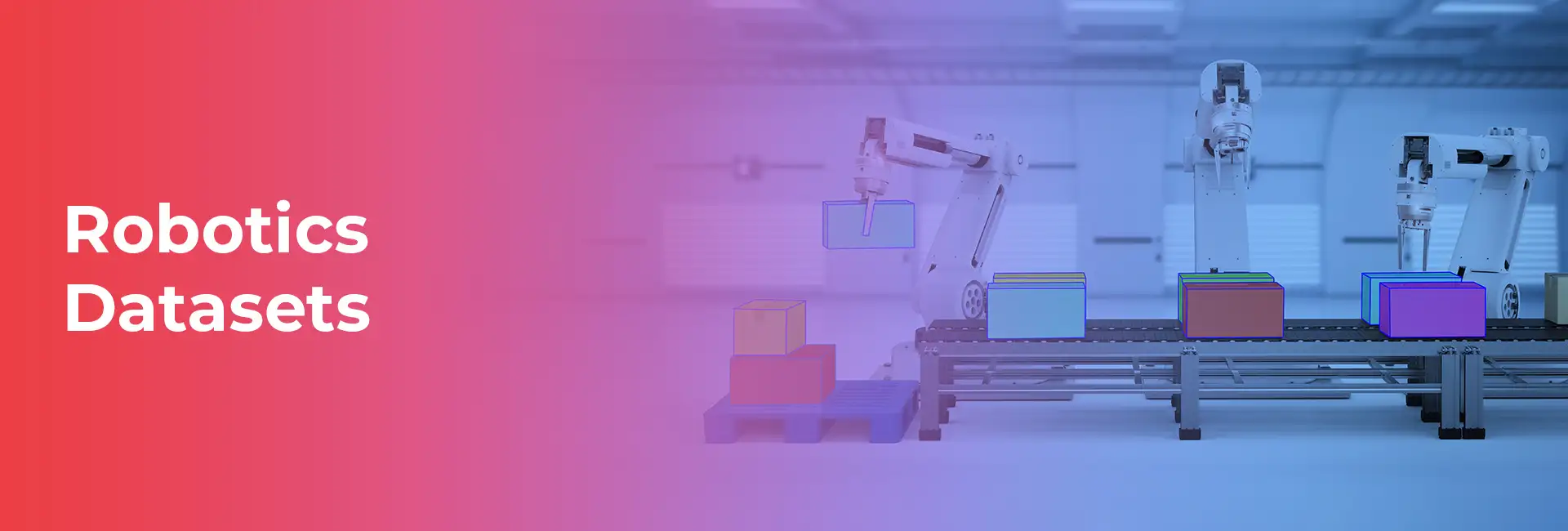
Optimizing Warehouse Robots with High-Precision Robotics Datasets
The rise of warehouse automation has made robotics a critical driver of efficiency in modern supply chains. However, one of the biggest challenges robotics companies face is training vision systems to reliably recognize objects in complex and dynamic environments.

A leading Swedish warehouse robotics company approached Macgence AI with this challenge. Their robots needed to accurately identify packages, shelves, pallets, and obstacles under varying lighting and movement conditions.
The Challenge
The client’s robotic system struggled with inconsistent object recognition due to:
- Incomplete Robotics Datasets: Existing data didn’t cover the diversity of warehouse environments.
- Annotation Inconsistencies: Past annotations lacked precision, leading to unreliable model training.
- Environmental Variability: Shadows, clutter, and moving workers created confusing visual inputs.
- Object Similarity: Identical-looking packages often tricked the AI, causing handling mistakes.
These issues led to frequent errors in robotic picking, slowed order fulfillment, and required higher human supervision. The Swedish robotics provider required a reliable partner to create large-scale, accurate robotics datasets that would strengthen their computer vision models.
The Macgence AI Solution
Macgence AI implemented a structured, multi-step solution focused on strengthening Robotics Datasets for real-world warehouse conditions:
Custom Annotation Strategy
- Designed bounding boxes, semantic segmentation, and polygonal annotations for precise object labeling.
- Implemented keypoint labeling for package edges and robotic gripper points to improve grasp accuracy.
Scalable Workforce with Human-in-the-Loop
- A trained annotation team worked with quality reviewers to ensure accuracy above 98%.
- Human-in-the-loop validation corrected edge cases where AI pre-labeling struggled.
Domain-Specific Guidelines
- Developed annotation guidelines tailored to warehouse settings, covering lighting changes, occlusions, and object overlaps.
- Ensured consistency across tens of thousands of images.
Continuous Feedback Loop
- Collaborated closely with the client’s AI engineers, refining annotation requirements as model performance improved.
- Delivered datasets in batches for iterative model training and faster deployment.
The Results
Within three months, Macgence AI delivered a high-quality dataset that transformed the Swedish client’s robotic performance.
Key Performance Improvements
| Metric | Before Macgence AI | After Macgence AI | Improvement |
|---|---|---|---|
| Object Recognition Accuracy | 72% | 92% | +40% |
| Robotic Picking Speed | Baseline | 25% faster | Efficiency gain |
| Error Rate in Package Handling | 18% | 9% | -50% errors |
| Human Supervision Needed | High | Reduced by 30% | Less manual oversight |
Summary of Impact
- 40% improvement in object recognition accuracy.
- 25% faster robotic picking speed, reducing overall order fulfillment time.
- Error rate cut in half, leading to fewer damaged goods.
- Reduced human supervision, freeing workers to focus on higher-value tasks.
Client Benefit
By partnering with Macgence AI, the Swedish warehouse robotics company unlocked higher efficiency and reliability in its automation workflows. With stronger vision models, their Robotics Datasets could adapt better to real-world warehouse challenges, delivering consistent results at scale.
This case demonstrates how precise robotics datasets are not just a supporting function but a critical enabler of robotics innovation.
 Previous Blog


You Might Like

April 8, 2026
Why Data is the Real Bottleneck in Embodied AI Training
AI is moving off our screens and into the physical world. For years, artificial intelligence lived exclusively on servers and smartphones. Now, it is driving autonomous systems, powering delivery robots, and animating humanoids. This transition from software-only models to physical agents represents a massive shift in how machines interact with human environments. While there is […]

April 7, 2026
Why Synthetic Speech Data Isn’t Enough for Production AI
The voice AI market is experiencing explosive growth. From virtual assistants and call automation systems to interactive voice bots, companies are racing to build intelligent audio tools. To meet the demand for training information, developers are increasingly turning to synthetic speech data as a fast, highly scalable solution. Because of this rapid adoption, a common […]

April 6, 2026
Where to Buy High-Quality Speech Datasets for AI Training?
The demand for intelligent voice assistants, call analytics software, and multilingual AI models is growing rapidly. Developers are rushing to build smarter tools that understand human nuances. But the biggest challenge engineers face isn’t writing better algorithms. The main hurdle is finding reliable, scalable, and high-quality audio collections to train their models effectively. Training a […]