


3D Mesh Human Hand Data: The Foundation of Precision AI

Human hand movements represent one of the most complex mechanical actions for artificial intelligence systems to understand. A single hand features over 20 degrees of freedom, allowing for a vast range of highly intricate motions. Machines struggle to interpret these rapid, overlapping movements. As a result, teaching computers to comprehend human gestures remains a massive […]
Pose Estimation Datasets: The Foundation of Human-Centric AI Systems

Teaching machines how to interpret human movement is one of the most exciting frontiers in computer vision. Algorithms can now track a runner’s stride, analyze factory worker ergonomics, and help robots safely interact with humans. At the core of all these breakthroughs is a foundational element: pose estimation datasets. As industries increasingly rely on automation, […]
Multimodal AI Data Enrichment for Smarter AI

Artificial intelligence is undergoing a massive transformation. For years, machine learning models relied heavily on single-format data, processing text, images, or audio in isolation. While this approach produced powerful tools, it fundamentally limited how machines perceived the world. Humans do not experience reality through a single sense. We listen, watch, feel, and read simultaneously to […]
How Industrial Automation Video Data Powers AI in Modern Factories

Industry 4.0 has transformed manufacturing facilities into highly connected, smart hubs of efficiency. At the core of this shift is artificial intelligence, which relies heavily on high-quality visual data to function effectively. Industrial automation video data serves as the foundation for these intelligent systems, enabling machines to observe and understand their physical environments. Through the […]
Solving Supply Chain Challenges with Warehouse Logistics Datasets

Automation and artificial intelligence are rapidly reshaping the supply chain. Facilities that once relied entirely on human labor and manual tracking now feature autonomous robots, computer vision systems, and predictive software. At the core of this transformation is a crucial element: data. Data is the fuel that optimizes these modern operations. Without accurate information, even […]
Custom Behavioral Cloning Datasets for Robotics: What to Look For
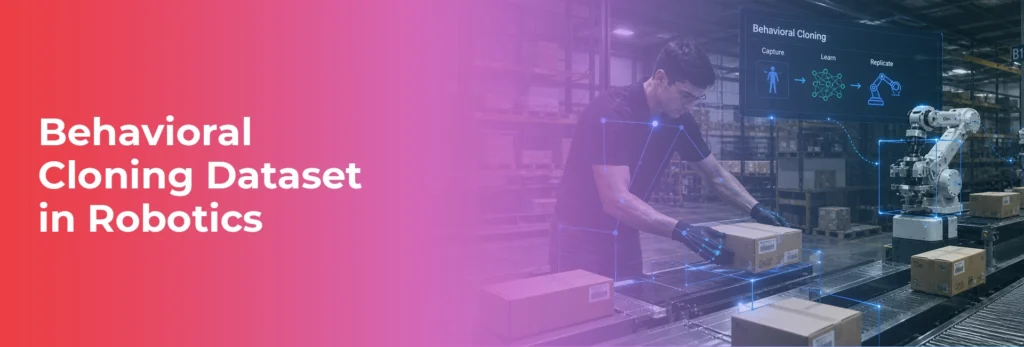
Artificial intelligence has drastically shifted how we program autonomous systems. Instead of writing endless lines of rigid code to govern every possible physical interaction, engineers now teach machines by example. This shift relies heavily on imitation learning, a branch of AI where robots learn to perform tasks by observing experts. At the heart of this […]
VLA Model Training Data: Architectures and Challenges

Large Language Models completely transformed how machines process text. Now, the frontier has shifted toward Vision-Language-Action (VLA) models. These advanced systems power the next generation of robotics, embodied AI, and real-world automation. They allow machines to see an environment, understand spoken commands, and execute physical tasks seamlessly. However, building these intelligent systems reveals a critical […]
How Multi-Modal Egocentric Data is Transforming Robot Learning
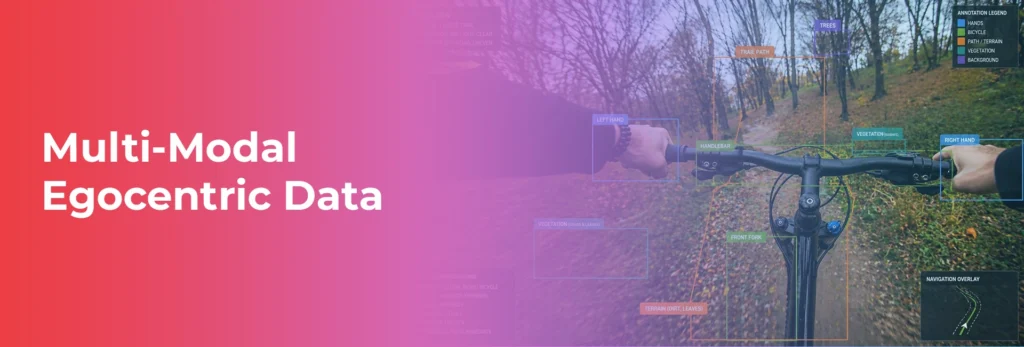
Robots are no longer trained exclusively on static, third-person imagery. Instead, they are learning to view and interact with the world from a human perspective. This shift is driven by Multi-Modal Egocentric Data, a game-changing approach that teaches machines to perform complex tasks by mimicking human actions. Combining vision, motion, audio, and physical sensor feedback […]
Fine-Grained Data: The Key to Precision Robotics
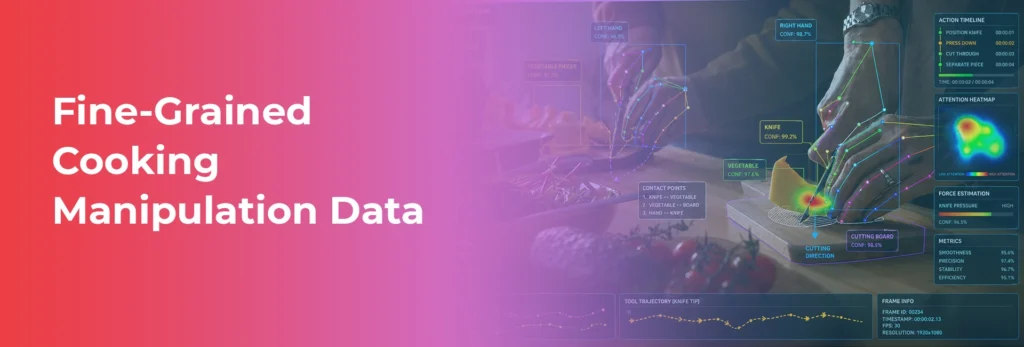
The field of robotics has officially moved past simple, repetitive automation. Modern robots are now expected to execute highly complex tasks that require exact precision and adaptability. Whether a robotic arm is assisting in a surgical procedure, assembling microscopic electronic components, or preparing a meal in a kitchen, these real-world tasks demand extraordinary fine motor […]
Powering Robotics AI With Activity Recognition
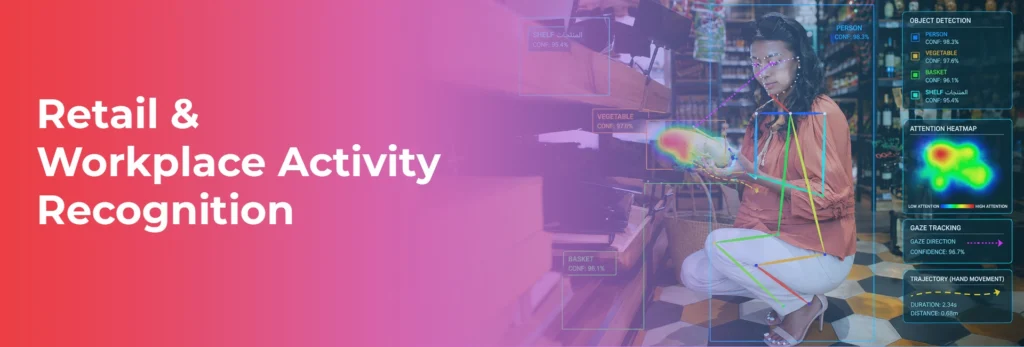
Robotics automation is undergoing a massive transformation. We are moving away from simple, rule-based machines and entering an era of AI-driven perception. Robots no longer just perform repetitive tasks; they observe, interpret, and react to human behavior in real time. Understanding human activities is especially critical in complex physical spaces like stores and factories. This […]