


- What is Medical Image Annotation?
- Why Medical Image Annotation Matters More Than Ever
- Types of Medical Image Annotation
- The Challenges of Medical Image Annotation
- How Professional Medical Image Annotation Services Transform Healthcare AI
- Real-World Applications Powered by Medical Image Annotation
- The Future of Medical Image Annotation
- Powering Healthcare Innovation with Trusted Medical Image Annotation
- Conclusion: Annotation as Healthcare's Invisible Foundation
Medical Image Annotation: The Backbone of AI-Powered Healthcare
The healthcare industry stands at the precipice of a revolutionary transformation. Artificial intelligence promises to enhance diagnostic accuracy, accelerate treatment decisions, and ultimately save lives. But behind every intelligent healthcare system lies a critical, often overlooked process: medical image annotation.
What is Medical Image Annotation?
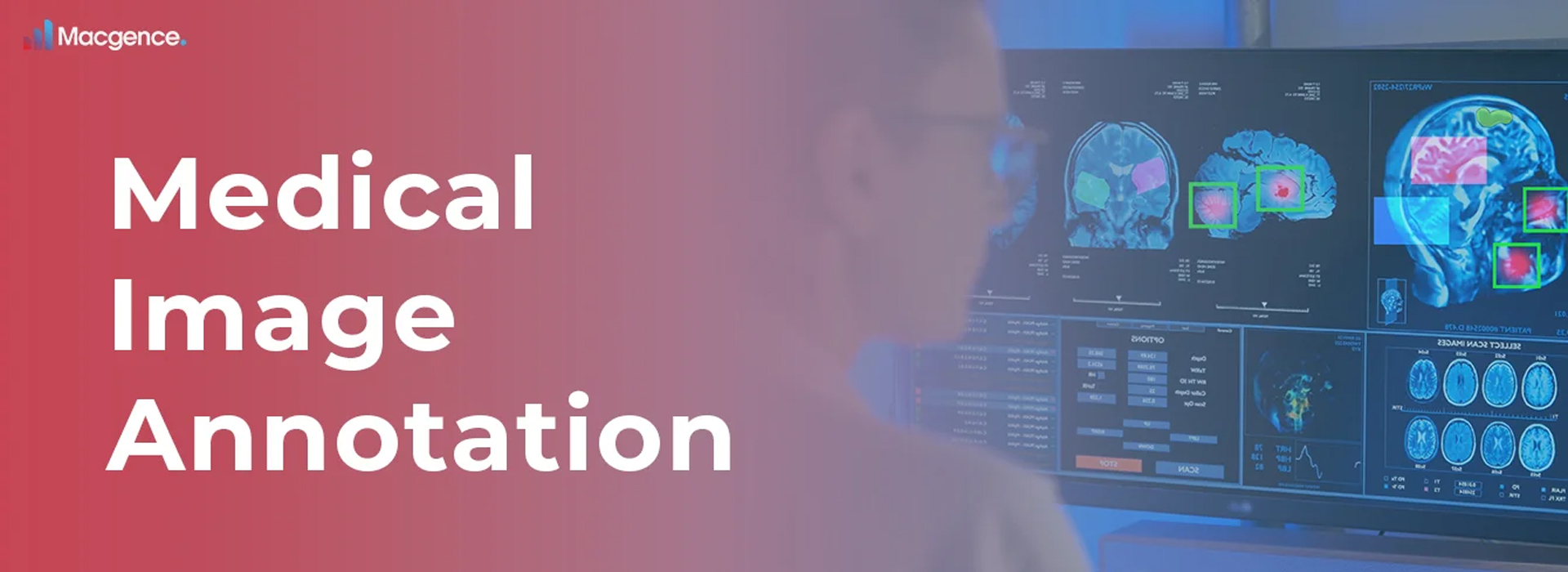
Medical image annotation is the meticulous process of labeling and marking specific features, anomalies, or regions of interest within medical imagery. Whether it’s identifying tumors in MRI scans, outlining organs in CT images, or marking fractures in X-rays, annotation transforms raw medical data into structured information that machine learning algorithms can understand and learn from.
Think of it as teaching a computer to “see” what experienced radiologists observe—but this teaching requires precision, medical expertise, and an understanding of both healthcare and technology.
Why Medical Image Annotation Matters More Than Ever
The AI Healthcare Revolution Demands Quality Data
Healthcare AI systems are only as intelligent as the data they’re trained on. A diagnostic algorithm trained on poorly annotated images will produce unreliable results, potentially putting patient safety at risk. High-quality medical image annotation ensures that AI models learn to recognize patterns accurately, distinguishing between normal tissue and pathological findings with the precision required in clinical settings.
The Growing Volume of Medical Imaging
Modern healthcare generates an astronomical amount of imaging data daily. Hospitals worldwide produce millions of X-rays, CT scans, MRIs, and ultrasound images annually. Radiologists face increasing workloads, and AI-powered diagnostic tools offer a solution—but only when properly trained through expert annotation.
Bridging the Global Healthcare Gap
In regions with limited access to specialized radiologists, AI systems trained on expertly annotated images can provide preliminary diagnoses, triage cases, and ensure critical conditions receive immediate attention. This democratization of healthcare expertise relies fundamentally on quality annotation.
Types of Medical Image Annotation
1. Bounding Box Annotation
The simplest form involves drawing rectangular boxes around areas of interest—ideal for identifying and localizing tumors, lesions, or foreign objects in medical scans.

2. Semantic Segmentation
This technique involves pixel-level classification, where every pixel in an image is labeled according to what it represents. It’s crucial for detailed organ segmentation or distinguishing between different tissue types.

3. Polygon Annotation
For irregular shapes that bounding boxes can’t capture accurately, polygon annotation allows annotators to trace precise boundaries around complex anatomical structures or abnormalities.

4. 3D Volumetric Annotation
Advanced medical imaging like CT and MRI produces three-dimensional data. Volumetric annotation extends labeling across multiple image slices, providing comprehensive spatial information about structures and pathologies.

5. Landmark Annotation
Used to mark specific anatomical points or features, landmark annotation is essential for applications like surgical planning, orthodontics, and tracking disease progression.

The Challenges of Medical Image Annotation
Specialized Medical Knowledge Required
Unlike general image annotation, medical image annotation demands annotators with healthcare backgrounds. Understanding anatomy, pathology, and imaging modalities is non-negotiable. A misidentified structure or overlooked abnormality can cascade into algorithmic errors with serious consequences.
Variability in Imaging Quality
Medical images vary widely in quality depending on equipment, imaging protocols, and patient factors. Annotators must adapt to these variations while maintaining consistency in their labeling approach.
Inter-Annotator Agreement
Even experienced medical professionals may interpret images differently. Establishing protocols and quality control measures to ensure consistency across multiple annotators is crucial for creating reliable training datasets.
Data Privacy and Compliance
Medical images contain sensitive patient information. Annotation processes must comply with regulations like HIPAA, GDPR, and other regional healthcare data protection laws, requiring robust security measures and anonymization protocols.
Time and Resource Intensity
High-quality annotation is labor-intensive. A single complex medical scan might require hours of expert attention to annotate properly, making scalability a significant challenge.
How Professional Medical Image Annotation Services Transform Healthcare AI
Expert-Led Annotation Teams
Professional annotation services employ teams that combine medical expertise with technical proficiency. This dual competency ensures annotations are both clinically accurate and technically suitable for AI training.
Quality Assurance Protocols
Multi-tier review processes, including peer reviews and expert validation, ensure annotation accuracy and consistency. Statistical measures of inter-annotator agreement help maintain quality standards across large projects.
Scalability and Efficiency
Specialized annotation platforms and workflows enable handling large volumes of medical imagery without compromising quality. This scalability is essential for developing robust AI models that require extensive training datasets.
Compliance and Security
Professional services implement comprehensive data protection measures, ensuring all annotation work complies with healthcare regulations and maintains patient confidentiality throughout the process.
Custom Annotation Guidelines
Every medical AI project has unique requirements. Professional data annotation services develop customized guidelines tailored to specific use cases, whether it’s cardiology, oncology, neurology, or other specializations.
Real-World Applications Powered by Medical Image Annotation
Cancer Detection and Diagnosis: AI systems trained on annotated oncological images can identify early-stage tumors with remarkable accuracy, potentially catching cancers before they become symptomatic.
Surgical Planning: Precisely annotated 3D medical images help surgeons visualize complex anatomical structures, plan approaches, and anticipate challenges before entering the operating room.
Disease Progression Tracking: Annotated longitudinal imaging data enables AI to track how diseases evolve over time, helping clinicians adjust treatment strategies proactively.
Emergency Triage: In emergency departments, AI trained on annotated trauma images can rapidly identify life-threatening conditions, prioritizing critical cases for immediate intervention.
Drug Development: Pharmaceutical companies use annotated medical images to assess treatment efficacy in clinical trials, accelerating the development of new therapies.
The Future of Medical Image Annotation
Emerging technologies promise to enhance annotation efficiency while maintaining quality. Semi-automated annotation tools that combine AI assistance with human expertise are reducing turnaround times. Active learning approaches enable algorithms to identify uncertain cases that require expert attention, optimizing resource allocation.
However, human expertise remains irreplaceable. The nuanced understanding that medical professionals bring to image interpretation cannot be fully automated. The future lies in human-AI collaboration, where technology handles routine aspects while experts focus on complex cases requiring clinical judgment.
Powering Healthcare Innovation with Trusted Medical Image Annotation
Looking to develop AI-powered healthcare solutions? Macgence provides expert medical image annotation services that combine clinical expertise with cutting-edge technology. Our specialized teams ensure your AI models are trained on precisely annotated, compliant data—because in healthcare, accuracy isn’t just important, it’s everything.
Conclusion: Annotation as Healthcare’s Invisible Foundation
Medical image annotation may operate behind the scenes, but its impact on healthcare’s future cannot be overstated. Every AI breakthrough in medical diagnosis, every life saved by earlier cancer detection, every surgical complication avoided through better planning—all trace back to the careful, expert work of medical image annotation.
As healthcare continues its digital transformation, the demand for high-quality, expertly annotated medical imaging data will only intensify. Organizations that recognize annotation’s critical role and partner with specialized providers will lead the charge in developing the next generation of life-saving medical AI technologies.
The question isn’t whether medical image annotation matters—it’s whether your AI healthcare project has the quality annotation foundation it needs to succeed.
FAQs – Medical Image Annotation
Medical image annotation is the process of labeling specific features, structures, or abnormalities in medical images like X-rays, MRIs, and CT scans. It’s essential for training AI diagnostic tools to accurately identify diseases and medical conditions, directly impacting patient safety and treatment outcomes.
Medical image annotation is performed by healthcare professionals including radiologists, medical technicians, and trained annotators with specialized medical knowledge. Services like Macgence employ teams combining medical expertise with technical proficiency for clinical accuracy.
Annotation time varies based on image complexity and annotation type. Simple annotations take minutes per image, while complex 3D segmentation can take several hours. Professional services optimize workflows to balance speed with accuracy.
Yes, reputable services must be HIPAA and GDPR compliant. This includes data encryption, secure access controls, patient information anonymization, and audit trails. Macgence maintains the highest standards of data privacy and regulatory compliance.
All major imaging modalities can be annotated, including X-rays, CT scans, MRIs, ultrasounds, PET scans, mammograms, pathology slides, and retinal images. Professional providers offer expertise across multiple specialties like radiology, oncology, and cardiology.
 Previous Blog


You Might Like
October 12, 2026
DataRobot Training for Enterprises: How High-Quality AI Training Data Improves Model Performance
DataRobot Training refers to the data preparation process, followed by machine learning model creation and evaluation on the DataRobot platform. It requires AI training data to be reliable in terms of labels and datasets as well as consistency of records – otherwise, there will be no valid predictions. As businesses transition AI from pilot to […]

October 5, 2026
Data Annotation Company for AI Training: From Healthcare Data Labeling to Robotics & Multimodal Datasets
AI is transitioning from pilot to production, and models do not fail due to their architecture but due to the quality of the data which was used to train them. With the scaling of projects in computer vision, NLP, healthcare, robotics, companies need a data annotation company that will provide domain-specific labeling of all kinds […]

September 28, 2026
Annotation Provider for AI Training: Computer Vision, NLP, Healthcare and Robotics Annotation
All effective AI models, from robots to clinical NLP engines, require one crucial layer: annotation. As enterprises race to deploy computer vision, NLP, healthcare, and robotics solutions, the quality of an annotation provider now makes all the difference between the success or failure of a model outside of lab conditions. Generic labeling cannot meet the […]