


Data Annotation: The Foundation of AI and Machine Learning Success
Artificial intelligence (AI) and machine learning (ML) are shaping industries at a speed we’ve never seen before. From self-driving cars to chatbots that understand natural language, these systems depend on one thing: high-quality annotated data. Without it, algorithms can’t learn, adapt, or make reliable predictions.
This article explores what data annotation is, its types, why it matters, industry use cases, challenges, and how businesses can choose the right data annotation partner. We’ll also look ahead at the future of annotation in the age of generative AI and automation.
What is Data Annotation?
At its core, data annotation is the process of labeling or tagging raw data (text, images, audio, video, or sensor data) so that machines can understand it.
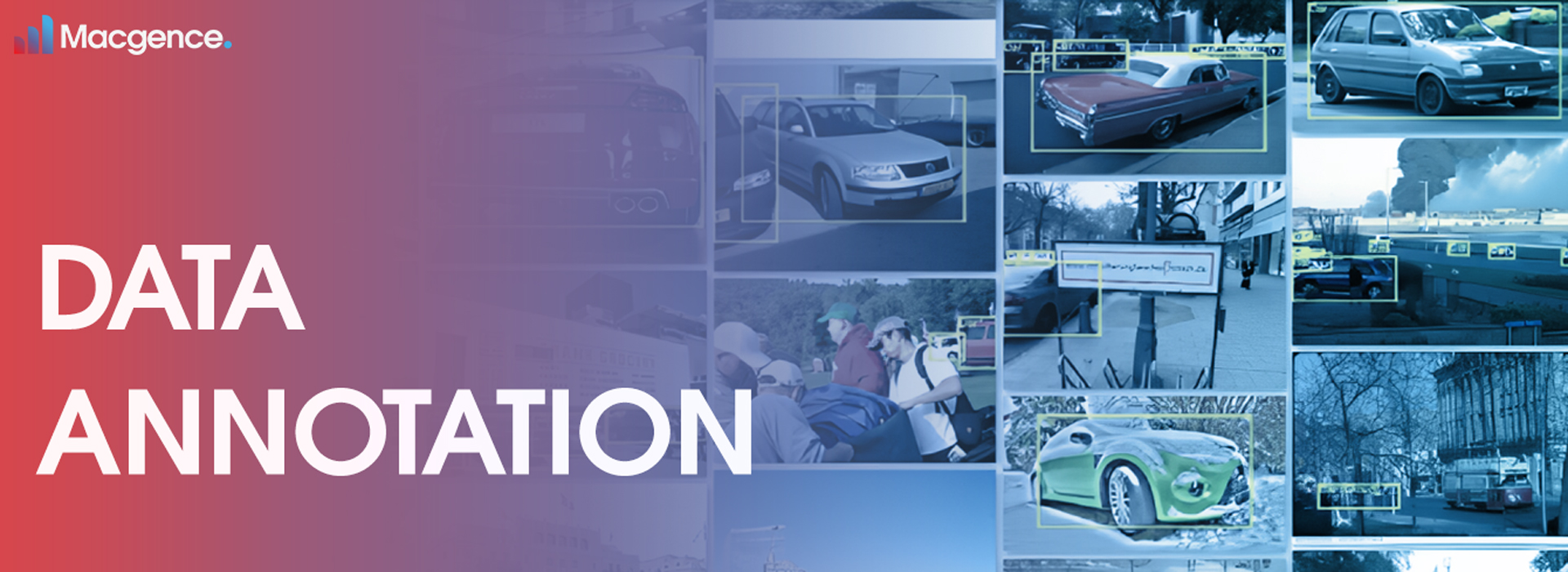
- Raw data: A photo of a busy street.
- Annotated data: The photo is marked with bounding boxes for pedestrians, cars, and traffic lights.
The annotation tells the AI system what it’s looking at. This structured information becomes the “training material” for machine learning models.
In simple terms, data annotation turns information into intelligence.
Types of Data Annotation
Different AI applications require different kinds of annotation. Here are the most common categories:
1. Text Annotation
Used for Natural Language Processing (NLP), chatbots, sentiment analysis, and search engines.
- Entity labeling: Tagging names, locations, dates.
- Intent detection: Identifying what a user wants (“Book me a flight”).
- Sentiment tagging: Positive, negative, or neutral.
- Linguistic annotation: Part-of-speech tagging, syntax parsing.
2. Image Annotation
Enables computer vision systems in healthcare, autonomous driving, retail, and more.
- Bounding boxes: Outlining objects.
- Semantic segmentation: Labeling every pixel.
- Landmark annotation: Identifying facial or body key points.
- Polygon annotation: More precise than bounding boxes for irregular shapes.
3. Audio Annotation
Essential for speech recognition and conversational AI.
- Transcription: Converting speech into text.
- Speaker identification: Distinguishing voices.
- Emotion tagging: Detecting tone and sentiment.
- Timestamping: Marking words to exact moments.
4. Video Annotation
Provides insights for object tracking and activity recognition.
- Frame-by-frame labeling: Annotating moving objects.
- Event tagging: Identifying actions like “running” or “falling.”
- Object tracking: Following items across frames.
5. Sensor Data Annotation
Key for IoT, robotics, and autonomous systems.
- LiDAR point cloud annotation: Used in self-driving cars.
- Time-series labeling: For predictive maintenance in industries.
Why is Data Annotation Important?
Without annotation, raw data is just noise. Here’s why annotation is the backbone of AI development:
- Accuracy: Properly labeled datasets produce reliable AI predictions.
- Scalability: Annotated data allows systems to improve as they process more examples.
- Customization: Domain-specific annotations (like medical imaging) help AI specialize.
- User Experience: From smarter search results to accurate voice assistants, annotation ensures AI feels natural.
Real-World Applications of Data Annotation
- Healthcare: Annotating X-rays and MRIs for faster, more accurate diagnostics.
- Automotive: Training autonomous vehicles to recognize pedestrians, traffic lights, and road signs.
- Retail & E-commerce: Powering recommendation engines and visual search.
- Finance: Fraud detection through labeled transaction patterns.
- Customer Support: Enhancing chatbots and virtual assistants with intent recognition.
Challenges in Data Annotation
While annotation is vital, it’s not without challenges:
- Volume: AI requires massive datasets, sometimes millions of annotations.
- Quality control: Inconsistent labels reduce accuracy.
- Expertise gap: Specialized industries like medicine require trained professionals.
- Cost & time: Manual annotation can be expensive and slow.
- Bias: Poorly designed datasets can introduce bias into AI models.
Future of Data Annotation
The field is evolving rapidly. Some trends to watch:
- AI-assisted annotation: Using machine learning to speed up manual labeling.
- Human-in-the-loop systems: Ensuring humans validate machine-generated annotations.
- Privacy-first annotation: Growing focus on anonymization and compliance.
- Generative AI: Synthetic data creation may reduce the burden of manual annotation, but human expertise will still be critical.
Data Annotation Services by Macgence AI
At Macgence, we specialize in delivering data annotation services across text, image, audio, video, and sensor data. Our global workforce and domain experts ensure:
- High-quality, accurate annotations
- Scalable solutions for growing datasets
- Human-in-the-loop quality assurance
- Industry-specific expertise (healthcare, automotive, finance, and more)
Whether you’re building a conversational AI, training computer vision systems, or working with sensitive datasets, Macgence provides tailored annotation services to accelerate your AI projects.
Conclusion
Data annotation may not get as much attention as flashy AI applications, but it is the invisible engine that powers them. From the accuracy of chatbots to the safety of autonomous cars, annotation is what makes AI usable and trustworthy.
As AI adoption accelerates, the demand for high-quality, domain-specific annotated datasets will only increase. Businesses that invest in reliable annotation today are setting the foundation for tomorrow’s AI-driven success.
FAQs on Data Annotation
They are often used interchangeably. Annotation is broader, including context and metadata, while labeling usually refers to assigning categories or tags.
Yes, but with limitations. AI-assisted tools can pre-label datasets, but humans are needed to ensure accuracy and context.
It depends on the complexity of the model. Some applications need thousands of annotated samples, others millions.
Healthcare, automotive, retail, finance, and customer support are leading sectors, but annotation is essential across all AI-driven industries.
Reputable providers use strict data privacy protocols, NDAs, and secure infrastructure to ensure compliance with GDPR, HIPAA, and other regulations.
 Previous Blog


You Might Like

April 7, 2026
Why Synthetic Speech Data Isn’t Enough for Production AI
The voice AI market is experiencing explosive growth. From virtual assistants and call automation systems to interactive voice bots, companies are racing to build intelligent audio tools. To meet the demand for training information, developers are increasingly turning to synthetic speech data as a fast, highly scalable solution. Because of this rapid adoption, a common […]

April 6, 2026
Where to Buy High-Quality Speech Datasets for AI Training?
The demand for intelligent voice assistants, call analytics software, and multilingual AI models is growing rapidly. Developers are rushing to build smarter tools that understand human nuances. But the biggest challenge engineers face isn’t writing better algorithms. The main hurdle is finding reliable, scalable, and high-quality audio collections to train their models effectively. Training a […]

April 1, 2026
How High-Quality Medical Datasets Improve Diagnostic AI
Artificial intelligence is rapidly transforming the healthcare landscape. From analyzing complex radiology scans to predicting patient outcomes through advanced analytics, diagnostic tools are becoming increasingly sophisticated. Hospitals and clinics rely on these systems to process information faster and assist medical professionals in making critical decisions. However, even the most advanced algorithms can fail if they […]