


- Why Robotics Data Collection is a Bottleneck
- What Does Outsourcing Robotics Data Collection Mean?
- Key Benefits of Outsourcing Robotics Data Collection
- Use Cases Where Outsourcing Makes the Most Impact
- In-House vs Outsourced Data Collection: A Quick Comparison
- Key Considerations Before Outsourcing
- Best Practices for Successful Outsourcing
- Future Trends in Robotics Data Collection
- Accelerate Your Robotics AI Deployment
- FAQs
Fast Track AI: Outsource Robotics Data Collection
The demand for faster robotics AI deployment is surging across industries like logistics, manufacturing, and autonomous systems. Companies are racing to build smarter, more capable robots. However, a major hurdle often slows down these ambitious timelines. Data collection is frequently the biggest bottleneck in robotics AI pipelines. Gathering the massive amounts of high-quality data required to train these complex models takes significant time and resources.
To solve this problem, many forward-thinking companies choose to outsource robotics data collection. This scalable solution allows organizations to bypass the logistical headaches of setting up their own infrastructure. By partnering with specialized vendors, teams gain immediate access to real-world robot training data. This approach offers unmatched speed, flexibility, and the ability to capture data in diverse, authentic environments, ultimately accelerating the path from development to deployment.
Why Robotics Data Collection is a Bottleneck
Robotics data is fundamentally different from traditional AI datasets. A language model might only need vast amounts of text, but a robotics model requires complex, multimodal inputs. These systems rely on continuous streams of data from LiDAR, depth sensors, and RGB cameras to understand their surroundings.
Furthermore, robots need to function reliably in unpredictable physical spaces. This creates a massive need for real-world, edge-case-rich data. Collecting this information presents several distinct challenges:
- Complex Hardware Setups: Procuring, calibrating, and maintaining the right combination of robots and sensors is incredibly difficult.
- Diverse Environments: Training a reliable model requires data from various indoor, outdoor, and industrial settings.
- High Costs and Time Investment: Building an in-house data collection operation drains budgets and delays core engineering work.
Ultimately, these hurdles disrupt deployment timelines. When data pipelines stall, the entire AI project falls behind schedule.
What Does Outsourcing Robotics Data Collection Mean?
When you outsource robotics data collection, you hire a specialized third-party vendor to handle the end-to-end process of gathering and processing your training data. Instead of building an internal team to manage hardware and logistics, you rely on experts who already have the infrastructure in place.
These vendors typically provide a comprehensive suite of services. They supply the necessary data collection infrastructure, including complex sensor setups like LiDAR, RGB cameras, and depth sensors. Beyond just capturing the raw information, many partners also manage the annotation and quality assurance (QA) pipelines. The main difference between an in-house and an outsourced approach is ownership of the logistical burden. Outsourcing shifts the focus of your internal team from data gathering back to model development and engineering.
Key Benefits of Outsourcing Robotics Data Collection
Partnering with an external vendor offers several strategic advantages for AI teams looking to scale quickly.
Faster Time-to-Market
When you outsource, you can establish parallel data collection pipelines. Vendors have immediate access to trained teams and pre-configured hardware. This means data collection can begin almost instantly, significantly shrinking the time it takes to get your product to market.
Access to Real-World Robot Training Data
Simulated data is helpful, but it cannot replace the nuances of the physical world. Outsourcing providers have the resources to capture real-world robot training data across diverse environments and geographies. They provide real operational scenarios, giving your models the context they need to handle unpredictable situations.
Cost Efficiency
Building an internal data operation requires a massive upfront investment in hardware and specialized hiring. Outsourcing eliminates these capital expenditures. Instead, you benefit from a flexible, pay-as-you-scale model. You only pay for the data you need, exactly when you need it.
Scalability and Flexibility
AI projects fluctuate in their data requirements. An external partner allows you to scale your datasets based on your current project phase. If you need to pivot and adapt to new use cases quickly, an established vendor can adjust their collection parameters without the friction of internal restructuring.
Expertise and Quality Assurance
Data collection vendors employ domain experts in robotics. They understand the specific requirements of multimodal sensor data. Because this is their core business, they utilize standardized QA and annotation workflows to ensure every dataset meets strict accuracy thresholds.
Use Cases Where Outsourcing Makes the Most Impact
Certain industries rely heavily on precise physical interactions, making high-quality data an absolute necessity.
- Warehouse Automation: Robots navigating busy fulfillment centers need precise object detection and spatial awareness.
- Autonomous Mobile Robots (AMRs): AMRs operating in factories require vast amounts of real-world robot training data to safely bypass humans and heavy machinery.
- Humanoid Robotics Training: Humanoids need highly complex, multimodal data to mimic natural movement and interact with everyday objects.
- Industrial Inspection Robots: Drones and crawlers inspecting pipelines or power grids must be trained on authentic visual data showing structural defects.
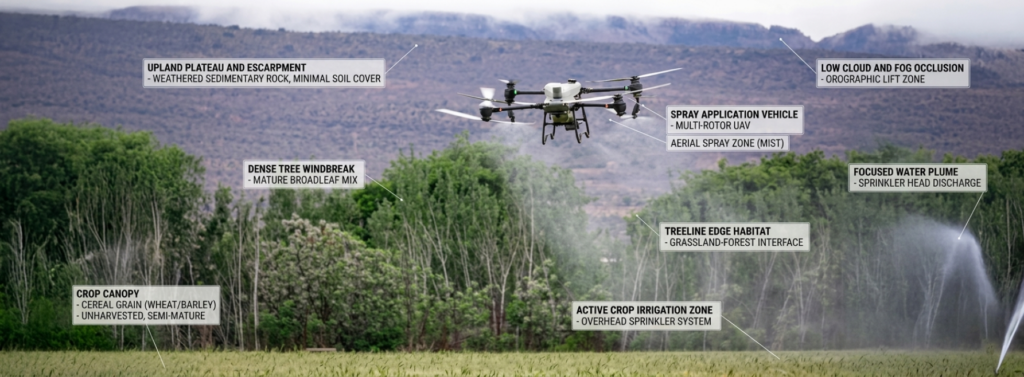
- Agriculture Robotics: Harvesting robots must navigate uneven terrain and varying weather conditions, requiring diverse environmental datasets.
In all these scenarios, real-world robot training data is critical. Outsourcing ensures these models learn from actual conditions rather than idealized simulations.
In-House vs Outsourced Data Collection: A Quick Comparison
| Factor | In-House | Outsourced |
| Setup Time | High | Low |
| Cost | High upfront | Flexible |
| Scalability | Limited | High |
| Data Diversity | Restricted | Extensive |
| Expertise | Requires hiring | Already available |
Key Considerations Before Outsourcing
Choosing to outsource is a smart move, but selecting the right partner is vital. You must evaluate a vendor’s specific expertise in the robotics domain. Do they have a proven track record of handling the exact sensor modalities your project requires?
Ensure the vendor has a reliable methodology to collect authentic, real-world robot training data. Data security and compliance are also paramount, especially if you are capturing footage in sensitive industrial environments.
Look closely at their customization capabilities. Can they adapt their hardware to match your specific form factor? Finally, scrutinize their annotation accuracy, QA processes, turnaround time, and ability to scale operations as your data needs grow.
Best Practices for Successful Outsourcing
To get the best results from your data partner, start by clearly defining your data requirements and edge cases. Ambiguity leads to unusable datasets.
It is always wise to start with a pilot project. This allows you to test the vendor’s capabilities and refine your instructions before committing to a massive collection effort. Maintain regular communication and establish tight feedback loops throughout the project. Finally, set measurable KPIs, such as annotation accuracy, data turnaround time, and overall dataset size, to ensure the vendor meets your standards.
Future Trends in Robotics Data Collection
The field of robotics AI is advancing rapidly, bringing new trends to data collection. We are seeing a massive rise in multimodal datasets, where audio, visual, and spatial data are seamlessly integrated.
There is also an increasing demand for extreme edge-case data to ensure robot safety. To meet these demands, companies are exploring the integration of synthetic data alongside real-world data to create robust training sets. As the industry matures, we can expect to see the growth of global data collection networks designed to capture diverse geographical and cultural nuances.
Accelerate Your Robotics AI Deployment
Choosing to outsource robotics data collection is a strategic advantage for any AI team. By removing the logistical burden of hardware procurement and field operations, companies can focus on what they do best: building exceptional models.
Leveraging external expertise leads to faster deployment timelines and vastly improved model performance. By securing high-quality, real-world robot training data, businesses can confidently adopt scalable data strategies and push the boundaries of what their robots can achieve.
FAQs
Ans: – Robotics data collection is the process of gathering sensory information—such as video, LiDAR, and depth data—from physical environments to train machine learning models for robots.
Ans: – Outsourcing allows companies to save time and money by avoiding the costs of hardware and specialized hiring. It provides immediate access to scalable data pipelines and domain expertise.
Ans: – Robotics AI relies heavily on multimodal data, including RGB images, LiDAR point clouds, infrared, depth sensor readings, and audio data.
Ans: – Vendors already have the infrastructure, hardware, and trained teams in place. This allows data collection to begin immediately, eliminating the months it typically takes to build an in-house operation.
Ans: – While synthetic data is useful for basic training, real-world data is essential for teaching robots how to handle unpredictable physical environments, varying lighting conditions, and complex edge cases.
Ans: – Industries like logistics, manufacturing, agriculture, healthcare, and autonomous transportation benefit the most due to their reliance on precise, real-world robotic operations.
Ans: – Look for a vendor with proven robotics domain expertise, strict QA and annotation processes, scalable infrastructure, and a strong track record of data security and compliance.
 Previous Blog


You Might Like
October 21, 2026
Best Image Annotation Companies in 2026: Compare Services, Accuracy and Pricing
Leading image annotation companies help computer vision teams create consistent, high-quality labels that support model training and evaluation. In 2026, enterprise teams train their detection, inspection, and robotics models on millions of images, so one poor vendor selection can delay full-scale implementation. Image annotation providers generally fall into two broad categories: managed annotation services and […]

October 12, 2026
DataRobot Training for Enterprises: How High-Quality AI Training Data Improves Model Performance
DataRobot Training refers to the data preparation process, followed by machine learning model creation and evaluation on the DataRobot platform. It requires AI training data to be reliable in terms of labels and datasets as well as consistency of records – otherwise, there will be no valid predictions. As businesses transition AI from pilot to […]

October 5, 2026
Data Annotation Company for AI Training: From Healthcare Data Labeling to Robotics & Multimodal Datasets
AI is transitioning from pilot to production, and models do not fail due to their architecture but due to the quality of the data which was used to train them. With the scaling of projects in computer vision, NLP, healthcare, robotics, companies need a data annotation company that will provide domain-specific labeling of all kinds […]