


How AI Data Annotation Benefits Businesses to grow fast
Data Annotation is a critical element of Artificial Intelligence (AI). When AI models recognize and classify data accurately, they can be processed and analyzed more easily. Machine learning algorithms can be developed using AI Data Annotation. This technology can be used to create datasets for image recognition, natural language processing, and autonomous vehicles.
What is Data Annotation and why do we need Them?
A Data Annotation allows machines to understand individual elements of training data (text, images, audio, or video).
It is impossible to develop or implement Artificial Intelligence (AI) technologies without data. By labeling data sets with relevant information, AI algorithms can interpret and understand data more accurately. Machine learning and deep learning rely heavily on data annotation to make accurate predictions, identify patterns, and provide meaningful insights.
For AI models to be effective, extensive and diverse datasets are necessary for testing and training, so annotations are essential. As well as classifying images, texts, and videos, Data Annotation can also detect objects and identify people in video recordings. When data is labeled and organized correctly, AI models can learn more accurately and efficiently.
As part of the AI development process, data annotation is necessary to allow AI models to interpret and understand data accurately. In addition to predicting, identifying patterns, and providing meaningful insights, AI models can be enhanced with appropriate data labeling and organization. Utilizing AI Data Annotation can enable the practical implementation of AI in real-world applications.
AI programs perform data annotation to guarantee the consistency and quality of NLP models. This helps to ensure that the models are as accurate as possible. By providing the necessary data for proper data annotation, NLP models can become more accurate and efficient in understanding natural language.
Is AI Data Annotation Easy to Use?
A crucial aspect of AI development is annotating data since it facilitates the training of AI models.
Before labeling the data, evaluating the associated labels and values is vital. You must not only know the types of brands and discounts, as well as the tools and workflows used for annotation. Each device has its own style. When you can learn to use these tools correctly, you need to devise a strategy to categorize the data efficiently.
Think about the best way to approach each annotation task and adhere to the guidelines to ensure preciseness and consistency. Additionally, you need to take into consideration taking breaks whenever you’re annotating data, as it can be a difficult task.
You should always record your annotation process to make sure your annotation is thorough and complete. In conclusion, make sure your work is accurate and consistent by double-checking it. The ease and complexity of the software’s AI Data Annotation options may depend on several factors.
The complexity of the intended annotations and the frequency of a given task impact the usability of software tools. It makes the tools either easy or difficult to use. Simple tasks such as image tagging, text classification, and sentiment analysis are easy to execute with these tools.
Annotation can incur more effort in more complex processes, such as object recognition and natural language processing. It is more difficult for users with excellent experience with artificial intelligence and machine learning. You may need to customize the annotation tools or design your algorithms to achieve accurate and consistent results.
Generally, the ease of use of AI Data Annotation tools varies. It is dependent on the user’s expertise, the specific task, and the hardware available. Adequate tools and training can make the annotation process more accessible. This leads to higher-quality data for machine learning models.
Types of Data Annotation
Here are some of the common types of data annotation:
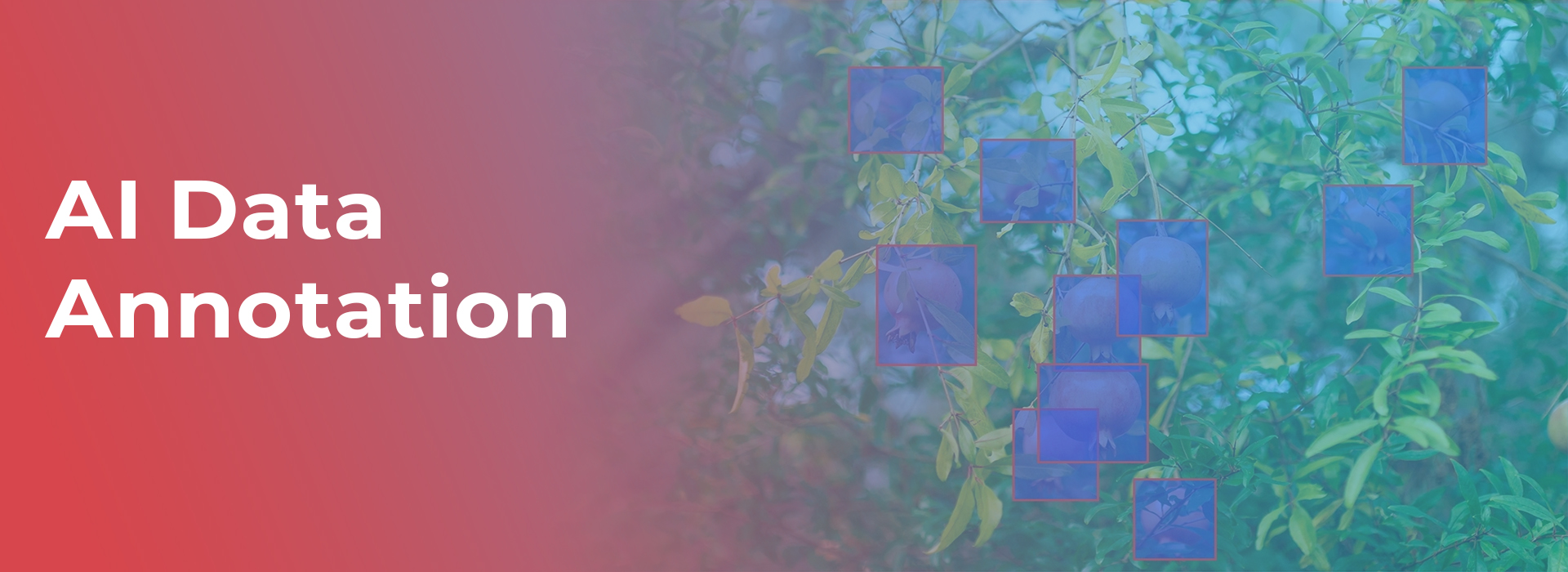
Image Annotation: In the Image Annotation, labels, bounding boxes, or other information about specific objects or features are added to images. This facilitates the identification of particular objects or components, such as people, vehicles, animals, or landmarks.
Text Annotation: It involves adding informative attributes to textual data, such as tags or labels. It can include identifying named entities, sentiment analysis, or classifying text into categories such as spam or not.
Audio Annotation: This process involves labeling audio data, such as speech or sound effects, with relevant information. Audio annotation can be helpful in various ways. It can identify specific words or phrases within a lesson. It can also classify audio clips based on genre, tempo, or mood.
Video Annotation: In this process, objects, events, or other relevant information in video data is labeled or tagged. This can include identifying specific things, tracking their movements, or labeling events within the video.
Sensor Data Annotation: This involves labeling data generated by sensors, such as temperature or humidity sensors, with relevant information. This process can help identify anomalies in the data, mark specific events, or predict future trends based on the data.
Why we choose Macgence for Data Annotation Services
Macgence is a well-known provider of data annotation services. With their experienced, multilingual team and reliable technology, they offer a convenient, cost-effective way to label data. They’re designed to provide quick downtime and high accuracy
The company offers custom solutions for a variety of NLP and ML needs. They specialize in text classification, sentiment analysis, entity extraction, and other tasks related to language understanding. Their platform allows clients to easily upload text documents, images, audio files, or videos for annotation.
They also can annotate large volumes of data quickly and accurately using automated methods. Macgence’s focus on quality assurance (QA) sets it apart from other providers.
 Previous Blog


You Might Like

October 5, 2026
Data Annotation Company for AI Training: From Healthcare Data Labeling to Robotics & Multimodal Datasets
AI is transitioning from pilot to production, and models do not fail due to their architecture but due to the quality of the data which was used to train them. With the scaling of projects in computer vision, NLP, healthcare, robotics, companies need a data annotation company that will provide domain-specific labeling of all kinds […]

September 28, 2026
Annotation Provider for AI Training: Computer Vision, NLP, Healthcare and Robotics Annotation
All effective AI models, from robots to clinical NLP engines, require one crucial layer: annotation. As enterprises race to deploy computer vision, NLP, healthcare, and robotics solutions, the quality of an annotation provider now makes all the difference between the success or failure of a model outside of lab conditions. Generic labeling cannot meet the […]

September 21, 2026
Video Captioning Services for Multimodal AI Training, Video Annotation, Accessibility, and Multilingual Content
Businesses across industries use video for training, product demonstrations, marketing, education, internal communications, and more recently, AI development. But raw video is messy: spoken dialogue is embedded in audio, and visuals have not been labeled yet. This is where video captioning services come into play, which help transform unstructured video into structured, searchable, and AI-friendly […]