


Optimizing Warehouse Robots with High-Precision Robotics Datasets
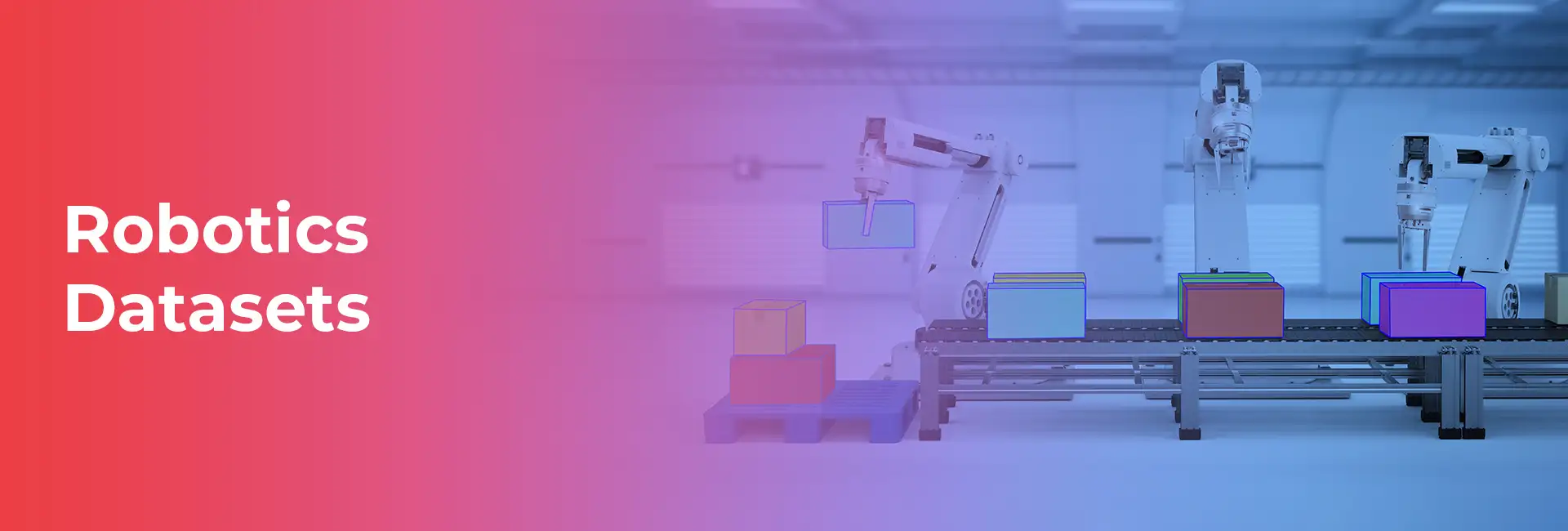
Robotics data collection plays a crucial role in the rise of warehouse automation, making robotics a critical driver of efficiency in modern supply chains. One of the biggest challenges robotics companies face is training vision systems to reliably recognize objects in complex and dynamic environments. High-quality robotics data collection enables AI models to accurately identify, classify, and respond to a wide variety of objects, helping warehouse robots perform tasks with greater precision, speed, and reliability.

A leading Swedish warehouse robotics company approached Macgence AI with this challenge. Their robots needed to accurately identify packages, shelves, pallets, and obstacles under varying lighting and movement conditions.
The Challenge
The client’s robotic system struggled with inconsistent object recognition due to limitations in robotics data collection, including insufficient training data, limited object diversity, inconsistent labeling, and a lack of real-world environmental variations.
- Incomplete Robotics Datasets: Existing data didn’t cover the diversity of warehouse environments.
- Annotation Inconsistencies: Past annotations lacked precision, leading to unreliable model training.
- Environmental Variability: Shadows, clutter, and moving workers created confusing visual inputs.
- Object Similarity: Identical-looking packages often tricked the AI, causing handling mistakes.
These issues led to frequent errors in robotic picking, slowed order fulfillment, and required higher human supervision. The Swedish robotics provider required a reliable partner to create large-scale, accurate robotics datasets that would strengthen their computer vision models.
The Macgence Robotics Data Collection Solution
Macgence AI implemented a structured, multi-step solution focused on strengthening Robotics Datasets for real-world warehouse conditions:
Custom Annotation Strategy
- Designed bounding boxes, semantic segmentation, and polygonal annotations for precise object labeling.
- Implemented keypoint labeling for package edges and robotic gripper points to improve grasp accuracy.
Scalable Workforce with Human-in-the-Loop
- A trained annotation team worked with quality reviewers to ensure accuracy above 98%.
- Human-in-the-loop validation corrected edge cases where AI pre-labeling struggled.
Domain-Specific Guidelines
- Developed annotation guidelines tailored to warehouse settings, covering lighting changes, occlusions, and object overlaps.
- Ensured consistency across tens of thousands of images.
Continuous Feedback Loop
- Collaborated closely with the client’s AI engineers, refining annotation requirements as model performance improved.
- Delivered datasets in batches for iterative model training and faster deployment.
Robotics Data Collection Results
Within three months, Macgence AI delivered a high-quality robotics data collection dataset that significantly transformed the Swedish client’s robotic performance. By providing accurate, diverse, and well-annotated data, the company helped improve object recognition, navigation, and overall AI model accuracy, enabling the robots to operate more efficiently in real-world warehouse environments.
Key Performance Improvements
| Metric | Before Macgence AI | After Macgence AI | Improvement |
|---|---|---|---|
| Object Recognition Accuracy | 72% | 92% | +40% |
| Robotic Picking Speed | Baseline | 25% faster | Efficiency gain |
| Error Rate in Package Handling | 18% | 9% | -50% errors |
| Human Supervision Needed | High | Reduced by 30% | Less manual oversight |
Summary of Impact
- 40% improvement in object recognition accuracy.
- 25% faster robotic picking speed, reducing overall order fulfillment time.
- Error rate cut in half, leading to fewer damaged goods.
- Reduced human supervision, freeing workers to focus on higher-value tasks.
Client Benefit
By partnering with Macgence AI, the Swedish warehouse robotics company unlocked higher efficiency and reliability in its automation workflows through high-quality robotics data collection. With accurate and diverse datasets, their vision models adapted more effectively to real-world warehouse challenges, delivering consistent performance and reliable results at scale.
This case study demonstrates that robotics data collection is not just a supporting process but a critical enabler of robotics innovation. High-quality data empowers AI-powered robots to improve object recognition, navigation, and decision-making, helping businesses build smarter, more efficient automation systems.
 Previous Blog


You Might Like
October 12, 2026
DataRobot Training for Enterprises: How High-Quality AI Training Data Improves Model Performance
DataRobot Training refers to the data preparation process, followed by machine learning model creation and evaluation on the DataRobot platform. It requires AI training data to be reliable in terms of labels and datasets as well as consistency of records – otherwise, there will be no valid predictions. As businesses transition AI from pilot to […]

October 5, 2026
Data Annotation Company for AI Training: From Healthcare Data Labeling to Robotics & Multimodal Datasets
AI is transitioning from pilot to production, and models do not fail due to their architecture but due to the quality of the data which was used to train them. With the scaling of projects in computer vision, NLP, healthcare, robotics, companies need a data annotation company that will provide domain-specific labeling of all kinds […]

September 28, 2026
Annotation Provider for AI Training: Computer Vision, NLP, Healthcare and Robotics Annotation
All effective AI models, from robots to clinical NLP engines, require one crucial layer: annotation. As enterprises race to deploy computer vision, NLP, healthcare, and robotics solutions, the quality of an annotation provider now makes all the difference between the success or failure of a model outside of lab conditions. Generic labeling cannot meet the […]