


- 1. What Does a Data Annotation Company Do for AI Training?
- 2. Transforming Raw Data into High-Quality AI Training Data with a Specialized Data Annotation Company
- 3. Computer Vision Data Annotation: Turning Images & Video into Machine-Readable Data
- 4. From Medical Imaging to EHRs: How a Data Annotation Company Drives Healthcare Data Labeling for Clinical AI
- 5. Scaling Conversational AI with Advanced Speech, Audio, and Multilingual Annotation Services
- 6. From 3D Bounding Boxes to Sensor Fusion: Essential Annotation for Autonomous Driving Systems and Robotics
- 7. From Egocentric Video Capture to Human Demonstration: Advanced Physical AI and Robotics Annotation Services
- 8. How to Choose the Right Data Annotation Company for Enterprise AI?
- 9. Why Industry Leaders Choose Macgence as Their Trusted Data Annotation Company
- 10. Frequently Asked Questions?
- 1. What is a data annotation company?
Data Annotation Company for AI Training: From Healthcare Data Labeling to Robotics & Multimodal Datasets
AI is transitioning from pilot to production, and models do not fail due to their architecture but due to the quality of the data which was used to train them. With the scaling of projects in computer vision, NLP, healthcare, robotics, companies need a data annotation company that will provide domain-specific labeling of all kinds of data in any industry.
Why Annotation Quality Matters Now?
- Multimodal models need aligned image, text, audio, video and sensor labels
- Regulated sectors demand privacy-first annotation workflows
- Generic labeling struggles with edge cases, rare events and real-world variation
- Enterprises want one partner for collection, annotation and validation
The right annotation provider makes your data model-ready through reliable data annotation services, human review, and strict quality assurance process performed at enterprise scale. Macgence does it, backed by 5M+ files annotated, 500+ projects delivered, ~95% annotation accuracy and 200+ languages of expertise.
1. What Does a Data Annotation Company Do for AI Training?
A data annotation company prepares your raw data for training your model by labeling, structuring, validating, and enriching different kinds of data like images, text, audio, video, sensors, and other data modalities, depending on the needs of your AI model. Think of it as a translation layer. Your model cannot understand the world, and data annotation services translate it into signals for learning from the outline of a tumor in a scan to the intent tag on a customer call.
Collection, Labeling, Annotation and Validation: What Is the Difference?
- Collection gathers the raw material for AI training datasets
- Labeling and annotation add tags, context and relationships
- Validation audits accuracy before delivery
The combination of human-in-the-loop review and pre-labeling by AI makes the repetitive tasks faster, leaving the nuances to experts. Macgence, being an annotation provider and AI training data provider, serves enterprises that require specific workflows and not the one-size-fits-all labeling.
2. Transforming Raw Data into High-Quality AI Training Data with a Specialized Data Annotation Company
The creation of high-quality training data involves several steps. A developed data annotation company deals with the entire process including requirements definition, AI data collection, curation, label schema design, quality assurance, validation, and delivery of production-ready data.
What Macgence Brings to the Pipeline
-
Custom dataset creation and data sourcing across 150+ countries and 800+ languages
-
Dataset curation, cleaning and bias detection to keep AI datasets balanced
-
Human validation that checks every dataset before it reaches model training
-
Compliance aligned with GDPR, SOC 2 and ISO standards
Instead of purchasing standard files, enterprises can order custom datasets, which will be created according to their specific model objectives. This is what differentiates an AI training data provider from others as the AI training datasets should perform in the real world – in retail, automotive, and healthcare.
3. Computer Vision Data Annotation: Turning Images & Video into Machine-Readable Data
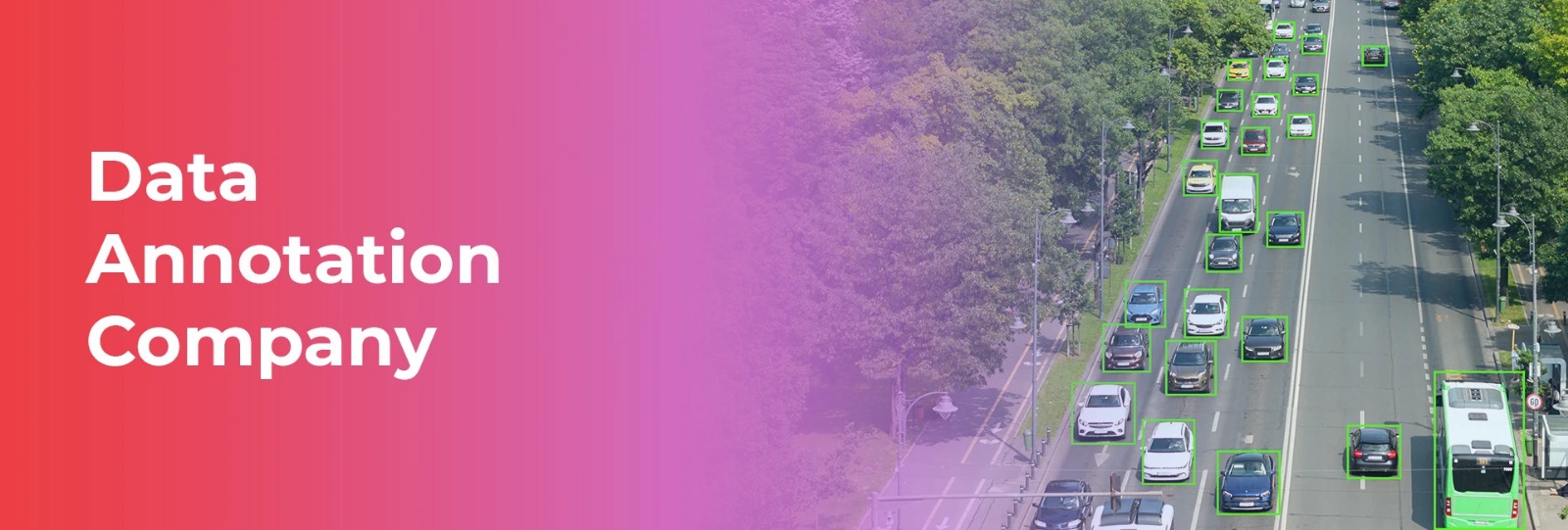
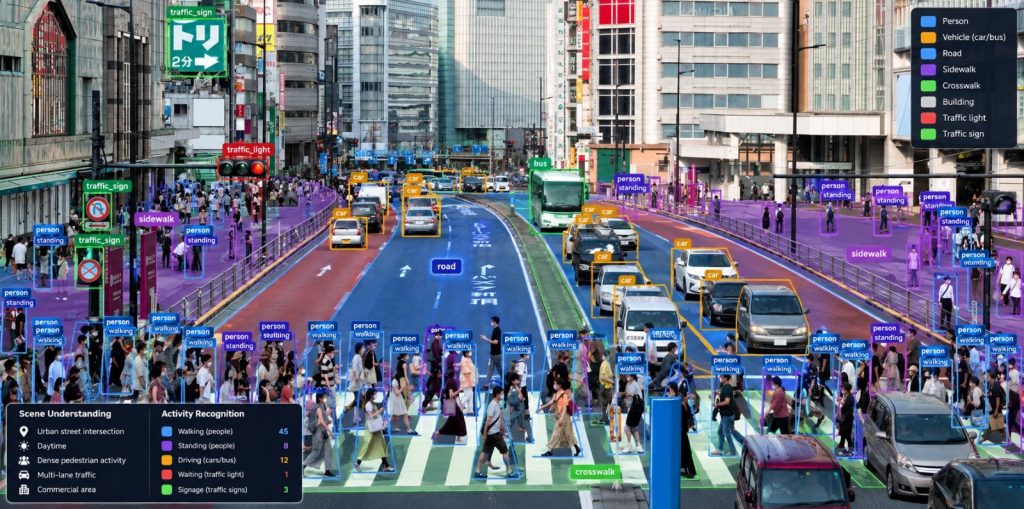
The right label depends on the decision a model must make. A retail model requires bounding boxes for the products, a driving system needs 3D objects, lane markings, and depth, while a video model requires action labels instead of frame-level tags. This is why a vision-oriented data annotation company designs a label schema before tagging any image.
Image and Video Annotation Techniques
- Image Annotation Services: bounding boxes, polygons, keypoints, semantic and instance segmentation
- Video annotation: object tracking, activity recognition and scene understanding
- Video captioning services and video narration annotation for multimodal training
Consistency in computer vision annotation is required across thousands of frames. Macgence has annotated over 5M+ images and files with ~95% annotation accuracy, providing reliable ground truth for vision teams developing detection and tracking models in retail, automotive, and warehouse automation.
4. From Medical Imaging to EHRs: How a Data Annotation Company Drives Healthcare Data Labeling for Clinical AI
Clinical datasets demand deep expertise in terminology, anatomy, diagnosis, procedures, medications, and context. Incorrect labeling of medications and anatomical structures can have serious consequences.
Where Clinical Expertise Matters
- Medical image annotation for radiology and MRI datasets
- Clinical NLP annotation of notes, reports and EHR documents
- Healthcare speech and document annotation for sensitive-data workflows with strict privacy controls
Domain-specialist annotation keeps labels clinically consistent. A clinical annotation specialist analyzes a scan or physician’s notes just like a clinician does. It enables emerging research in generative AI in radiology and medical documentation. Macgence provides healthcare datasets for machine learning with 100+ validated subject matter experts and HIPAA- and GDPR-compliant processes. Annotation helps to train the model; clinical safety still requires validation and control.
5. Scaling Conversational AI with Advanced Speech, Audio, and Multilingual Annotation Services
Voice AI starts with how people speak in real life: accents, interruptions, background noises, and different languages. Voice models learn all this from well-annotated audio datasets, whether the setting is a call center, a clinic or a bank branch.
What Speech Annotation Captures
- Transcription and speaker diarization
- Language, dialect, regional accent and pronunciation labels
- Intent and emotion tags for call-center and medical conversations
- Video narration annotation that links spoken commentary to on-screen action
Macgence delivers voice data collection for AI and speech data collection services, backed by 50K+ hours of speech datasets, 200+ languages of expertise and 6,000+ transcribers across 80+ countries. It built digital assistant training data in 40+ languages for a major cloud voice provider, proof that it is a multimodal AI training data partner, not just an image labeling vendor.
6. From 3D Bounding Boxes to Sensor Fusion: Essential Annotation for Autonomous Driving Systems and Robotics
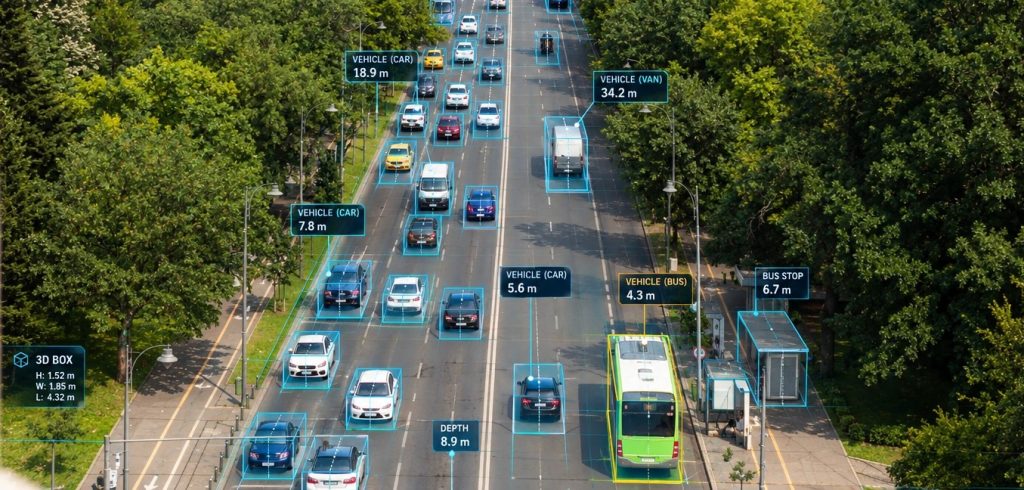
Autonomous systems never learn from a single image. They use synchronized streams from camera, LiDAR, radar, and depth sensors; annotation should take into account the relations between modalities, not just the relations within each separate file. A pedestrian partially occluded by a van should be marked in both the camera frame and the LiDAR point cloud.
What Sensor-Fusion Annotation Includes
- LiDAR annotation services: point-cloud annotation with 3D bounding box annotation to specify position, dimensions, orientation, and distance
- Spatial and temporal annotation for every frame, including edge cases like night, rain, and occlusion
- Multimodal sensor fusion datasets that synchronize all the streams to the same instant.
Macgence offers autonomous driving data collection services that include in-vehicle driver monitoring and external road, pedestrian, and traffic data. This results in multi modal ADAS datasets that reflect true operating conditions and improve computer vision data annotation.
7. From Egocentric Video Capture to Human Demonstration: Advanced Physical AI and Robotics Annotation Services
Robots are deployed in the real world, so static labels are not sufficient. Physical AI requires data that tells you what actually happened, where, how the object was manipulated, what the person meant, and how the environment reacted. This provides a far stronger foundation than simply labeling static robot recordings.
Building Robotics Training Data
- Robotics data collection through egocentric data collection and teleoperations robotics data
- Operator-in-the-loop training data capturing corrections, failure and retry behavior
- Robotics data annotation: object and instance labels, pose estimation, 3D spatial labeling, action and temporal tagging
This robotics annotation, or annotation for robotics, feeds AI robotics training datasets and AI datasets for robotics industry programs, including vision-language-action models. Physical AI data providers include Macgence, which is a robotics data partner that performs human-in-the-loop validation on robotics training data collection and Physical AI annotation.
8. How to Choose the Right Data Annotation Company for Enterprise AI?
Having an in-house team provides more control; however, the value of in-house AI teams decreases when specialized annotation needs to be done in a larger variety of languages, modalities and domains. An experienced data annotation company will help you expand your team and handle the data layer while your engineers take care of the models. The price per label does not tell you everything about the real cost.
Eight Criteria for Comparing Data Annotation Companies
- Domain expertise in healthcare, NLP, vision, automotive and robotics
- Multimodal capability across text, image, audio, video and sensors
- Scalability from pilot to production
- Quality assurance with transparent review layers
- Human-in-the-loop expertise where judgment matters
- Global, multilingual reach
- Security and compliance for sensitive data
- End-to-end capability: collect, annotate, validate, deliver
The best annotation provider doubles as a top AI data collection company, a long-term AI training data provider and, for physical systems, a dependable robotics data partner.
9. Why Industry Leaders Choose Macgence as Their Trusted Data Annotation Company
Build AI Training Data with Macgence
Building training data for your upcoming AI project? Macgence can help you collect, curate, annotate, validate and scale production-ready AI training data in healthcare, NLP, computer vision, speech, autonomous systems, robotics and multimodal applications. Whether it is healthcare data labeling or robotics data annotation, Macgence can deliver scalable and model-ready pipelines, tailored for your model. Quality, scalability and compliance are integrated in every stage of a Macgence project.
Why Enterprises Trust Macgence?
- 400+ annotators delivering 95%+ annotation accuracy
- End-to-end coverage: data collection, annotation, validation, RLHF and data licensing
- Data protection aligned with GDPR, SOC 2 and ISO standards
- 100+ vetted subject matter experts across healthcare, finance, legal, tech and retail
Tell us what your model needs. We will help scope the data, annotation and delivery workflow around it.Talk to Macgence about your AI training data requirements →
10. Frequently Asked Questions?
1. What is a data annotation company?
A data annotation company annotates, structures and validates raw images, text, audio, video and sensor data to create accurate training data that is ready to be used by machine learning teams.
2. What services does a data annotation company provide?
Image annotation services, NLP data annotation, audio and speech, video, healthcare, sensor and robotics annotation, in addition to data collection and validation according to your model’s required schema.
3. Why is data annotation important for AI training?
High-quality annotation gives supervised models the labeled examples and relationships they need to learn a task, while consistent labeling and representative datasets can help improve model performance and reduce sources of dataset bias.
4. How does Macgence support healthcare data labeling?
Through clinical text, medical imaging and speech annotation, domain specialists and sensitive-data workflows, assisting healthcare datasets for machine learning, not replacing, clinical validation.
5. Can a data annotation company support robotics and Physical AI?
Yes. Macgence supports robotics data collection, egocentric and teleoperations data, 3D and spatial annotation, and multimodal sensor data for Physical AI training.
6. How do I start a data annotation project with Macgence?
Share your data type, use case, target languages or regions, annotation requirements and approximate scale. Macgence will define the collection, annotation, validation and delivery workflow.
 Previous Blog


You Might Like

September 28, 2026
Annotation Provider for AI Training: Computer Vision, NLP, Healthcare and Robotics Annotation
All effective AI models, from robots to clinical NLP engines, require one crucial layer: annotation. As enterprises race to deploy computer vision, NLP, healthcare, and robotics solutions, the quality of an annotation provider now makes all the difference between the success or failure of a model outside of lab conditions. Generic labeling cannot meet the […]

September 21, 2026
Video Captioning Services for Multimodal AI Training, Video Annotation, Accessibility, and Multilingual Content
Businesses across industries use video for training, product demonstrations, marketing, education, internal communications, and more recently, AI development. But raw video is messy: spoken dialogue is embedded in audio, and visuals have not been labeled yet. This is where video captioning services come into play, which help transform unstructured video into structured, searchable, and AI-friendly […]
September 14, 2026
Teleoperations Robotics Data for Physical AI: Building Better AI Robotics Training Datasets
Physical AI only earns trust when it acts correctly in the real world, not just when it recognizes patterns on a screen. Robots performing tasks in warehouses, manufacturing facilities, hospitals, and urban environments need to translate their perceptions into safe and accurate physical action, which static training datasets alone cannot fully capture. Here, teleoperations robotics […]