


- What Are Healthcare AI Datasets?
- Why Diagnostic AI Accuracy Matters
- Key Factors That Define High-Quality Medical Training Data
- How High-Quality Datasets Improve Diagnostic AI Accuracy
- Real-World Use Cases
- Challenges in Building High-Quality Healthcare AI Datasets
- How Macgence Delivers High-Quality Medical Training Data
- Powering Next-Generation Diagnostic AI
- References
- FAQs
How High-Quality Medical Datasets Improve Diagnostic AI
Artificial intelligence is rapidly transforming the healthcare landscape. From analyzing complex radiology scans to predicting patient outcomes through advanced analytics, diagnostic tools are becoming increasingly sophisticated. Hospitals and clinics rely on these systems to process information faster and assist medical professionals in making critical decisions.
However, even the most advanced algorithms can fail if they learn from poor-quality or biased information. An AI model is essentially a reflection of the information it consumes. When medical models ingest flawed information, they produce flawed results. The accuracy of any diagnostic tool is directly proportional to the quality of the healthcare AI datasets used during its development.
To build reliable models that doctors can actually trust, developers need structured, accurate, and diverse information. This is where Macgence steps in, providing high-quality, reliable medical training data that empowers healthcare AI to reach its full potential.
What Are Healthcare AI Datasets?
Healthcare AI datasets are structured collections of medical information used to train machine learning models. These datasets teach algorithms how to recognize patterns, identify anomalies, and make informed predictions regarding patient health.
Medical training data comes in several different forms:
- Medical imaging: X-rays, MRIs, CT scans, and ultrasounds.
- Electronic Health Records (EHR): Comprehensive patient histories, lab results, and medication logs.
- Clinical notes and transcription: Text-based records from doctors and nurses.
- Wearable and sensor data: Real-time health metrics like heart rate and oxygen levels.
Properly structured and annotated information is the foundation of AI model development. Without clear labels and accurate categorization, an AI system cannot distinguish between healthy tissue and a potential health threat.
Why Diagnostic AI Accuracy Matters
Diagnostic AI accuracy directly impacts patient outcomes. When these systems operate correctly, they enable early disease detection and significantly reduce human error. Doctors can catch conditions like cancer or cardiovascular disease in their earliest stages, greatly improving survival rates.
Furthermore, healthcare organizations must adhere to strict regulatory and compliance requirements, such as HIPAA and GDPR. AI tools must be built on compliant data to protect patient privacy while delivering clinical value.
The risks of inaccurate AI are severe. A poorly trained model can lead to misdiagnosis, delayed treatment, and severe harm to patients. Ultimately, repeated failures will cause a complete loss of trust in AI systems among medical professionals.
Key Factors That Define High-Quality Medical Training Data
Building effective models requires more than just gathering large amounts of information. The data must meet strict criteria to ensure it translates into safe clinical applications.
Data Accuracy and Cleanliness
High-quality datasets require error-free labeling and annotation. Developers must meticulously remove noise, duplicate entries, and inconsistencies before feeding the information into an algorithm. Clean data ensures the AI learns the correct clinical patterns.
Annotation Quality by Domain Experts
Medical training data cannot be labeled by the general public. It requires the expertise of certified radiologists, pathologists, and clinicians. Human-in-the-loop validation ensures that complex medical images and clinical notes are interpreted accurately, giving the AI a reliable foundation.
Dataset Diversity and Representation
An AI model trained entirely on one specific demographic will struggle to diagnose patients from different backgrounds. High-quality datasets must include diverse demographics, geographies, and disease variations. This broad representation is essential for avoiding bias in healthcare AI datasets.
Scalability and Volume
Machine learning algorithms need massive amounts of information to generalize well. Large datasets expose the model to a wider variety of scenarios, including rare disease cases that might be missed in smaller sample sizes.
Compliance and Data Security
Patient privacy is non-negotiable. All healthcare AI datasets must be strictly HIPAA-compliant. This involves robust de-identification and anonymization processes to ensure no personal health information is ever exposed during model training.
How High-Quality Datasets Improve Diagnostic AI Accuracy
When developers prioritize exceptional medical training data, the resulting algorithms perform significantly better across all clinical metrics.
Better Pattern Recognition
High-quality data enables models to detect subtle anomalies that the human eye might miss. With precise annotations, the AI learns exactly what a microcalcification or a hairline fracture looks like, improving its overall diagnostic precision.
Reduced False Positives and Negatives
Cleaner data translates directly to more reliable predictions. By eliminating ambiguous or incorrectly labeled examples during training, the model learns clear boundaries between healthy and diseased states, drastically reducing false alarms and missed diagnoses.
Improved Model Generalization
A model trained on diverse, high-quality information works across various populations and real-world scenarios. It performs consistently whether it is analyzing a scan from a state-of-the-art urban hospital or a rural clinic with older equipment.
Faster Model Training and Optimization
When data is already clean and accurately labeled, developers spend less time fixing errors and retraining models. This streamlined process allows engineering teams to optimize algorithms faster and bring diagnostic tools to market sooner.
Enhanced Clinical Trust and Adoption
Doctors are highly skeptical of tools that produce erratic results. When diagnostic AI accuracy is consistently high, medical professionals are much more likely to adopt the technology and integrate it into their daily workflows.
Real-World Use Cases
The application of accurate medical datasets is already transforming several key areas of medicine.
Radiology AI
Radiologists use algorithms trained on meticulously annotated imaging datasets to identify tumors, fractures, and neurological abnormalities. These tools act as a second pair of eyes, highlighting areas of concern on thousands of scans per day.
Pathology AI
Pathology models rely on labeled biopsy images to diagnose various forms of cancer at a cellular level. High-quality training data helps the AI differentiate between benign and malignant cells with incredible speed.
Predictive Analytics
Hospitals use Electronic Health Records to predict patient deterioration. By analyzing historical EHR datasets, predictive AI can alert nurses to potential issues like sepsis hours before symptoms become severe.
Voice and Clinical NLP
Natural Language Processing models help automate medical transcription. By learning from vast amounts of clinical notes, these systems can accurately transcribe complex medical terminology and assist doctors in generating structured diagnostic reports.
Challenges in Building High-Quality Healthcare AI Datasets
Despite the clear benefits, sourcing top-tier medical data is difficult. Data privacy and access restrictions make it incredibly challenging to gather information across different hospitals. Furthermore, the high cost of expert annotation limits how much data smaller developers can process.
Another major hurdle is the lack of standardized formats. Hospitals use different EHR systems and imaging protocols, causing massive data fragmentation. Finally, the inherent bias in existing medical datasets means developers must work twice as hard to ensure their models serve all populations equally.
How Macgence Delivers High-Quality Medical Training Data
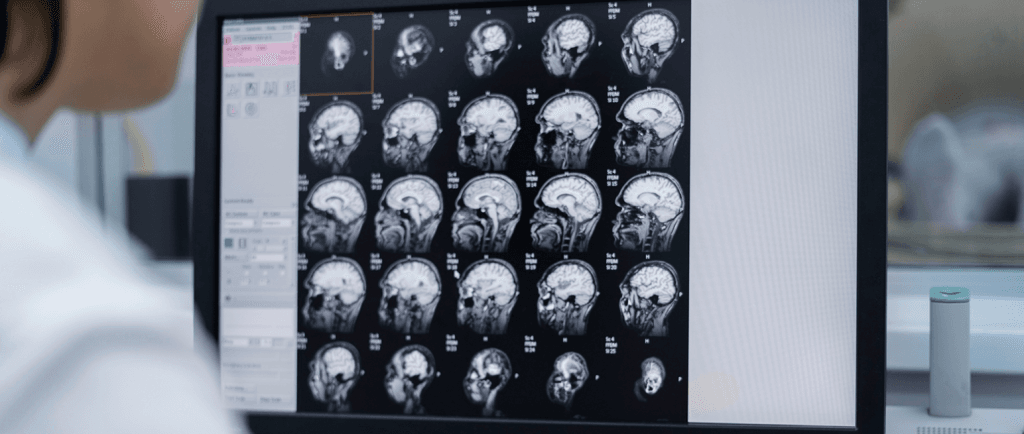
Overcoming the hurdles of medical data collection requires a specialized approach. Macgence provides fully managed AI data solutions designed specifically for the healthcare sector. We understand that diagnostic AI accuracy depends entirely on the information fueling it.
Our platform gives you direct access to domain-specific annotators, including board-certified medical experts who ensure every label is clinically accurate. We offer scalable dataset creation that covers global and multilingual requirements, helping you build models that perform reliably across diverse populations.
Every project undergoes strict quality assurance processes and maintains rigorous compliance with healthcare regulations like HIPAA. Whether you need thousands of annotated MRIs or structured clinical texts, Macgence builds custom dataset solutions tailored to your specific diagnostic AI use cases.
Powering Next-Generation Diagnostic AI
Diagnostic AI is only as good as the data behind it. You cannot build a life-saving algorithm on a foundation of messy, biased, or unverified information. High-quality healthcare AI datasets are not optional—they are the critical component that separates a successful clinical tool from a failed experiment.
To build diagnostic tools that doctors trust and patients rely on, you need the right data partner. Partner with Macgence for reliable, scalable medical training data and take your healthcare AI models to the next level.
References
- Artificial Intelligence in Healthcare: Clinical Applications and Challenges – National Center for Biotechnology Information (NCBI) – https://pmc.ncbi.nlm.nih.gov/articles/PMC12933003/
- Evaluating and Mitigating Bias in Medical AI – Nature Medicine – https://www.nature.com/articles/s41591-023-02608-w
- NIH Study on AI in Medical Decision-Making – National Institutes of Health (NIH) – https://www.nih.gov/news-events/news-releases/nih-findings-shed-light-risks-benefits-integrating-ai-into-medical-decision-making
FAQs
Ans: – Healthcare AI datasets are organized collections of medical information, such as X-rays, clinical notes, and health records, used to train artificial intelligence models to understand medical patterns.
Ans: – AI models learn strictly from the examples they are given. Accurate, well-labeled medical training data teaches the model to make correct diagnoses, while poor data leads to dangerous errors.
Ans: – Annotation gives context to raw data. Having certified medical experts label images and text ensures the AI learns the precise clinical meaning of the information, improving its overall reliability.
Ans: – Poor-quality datasets lead to algorithms that generate false positives and negatives. This can result in misdiagnoses, inappropriate treatments, and a severe loss of trust from healthcare providers.
Ans: – If a dataset only includes information from a specific demographic, the AI will perform poorly when diagnosing patients outside of that group, leading to unequal healthcare outcomes.
Ans: – Yes, high-quality datasets must undergo strict de-identification processes to ensure compliance with privacy laws like HIPAA and GDPR, completely protecting patient identities.
Ans: – Macgence uses strict quality assurance workflows, leverages verified domain experts for annotation, and follows global compliance standards to deliver accurate and scalable medical data solutions.
 Previous Blog


You Might Like

April 8, 2026
Why Data is the Real Bottleneck in Embodied AI Training
AI is moving off our screens and into the physical world. For years, artificial intelligence lived exclusively on servers and smartphones. Now, it is driving autonomous systems, powering delivery robots, and animating humanoids. This transition from software-only models to physical agents represents a massive shift in how machines interact with human environments. While there is […]

April 7, 2026
Why Synthetic Speech Data Isn’t Enough for Production AI
The voice AI market is experiencing explosive growth. From virtual assistants and call automation systems to interactive voice bots, companies are racing to build intelligent audio tools. To meet the demand for training information, developers are increasingly turning to synthetic speech data as a fast, highly scalable solution. Because of this rapid adoption, a common […]

April 6, 2026
Where to Buy High-Quality Speech Datasets for AI Training?
The demand for intelligent voice assistants, call analytics software, and multilingual AI models is growing rapidly. Developers are rushing to build smarter tools that understand human nuances. But the biggest challenge engineers face isn’t writing better algorithms. The main hurdle is finding reliable, scalable, and high-quality audio collections to train their models effectively. Training a […]